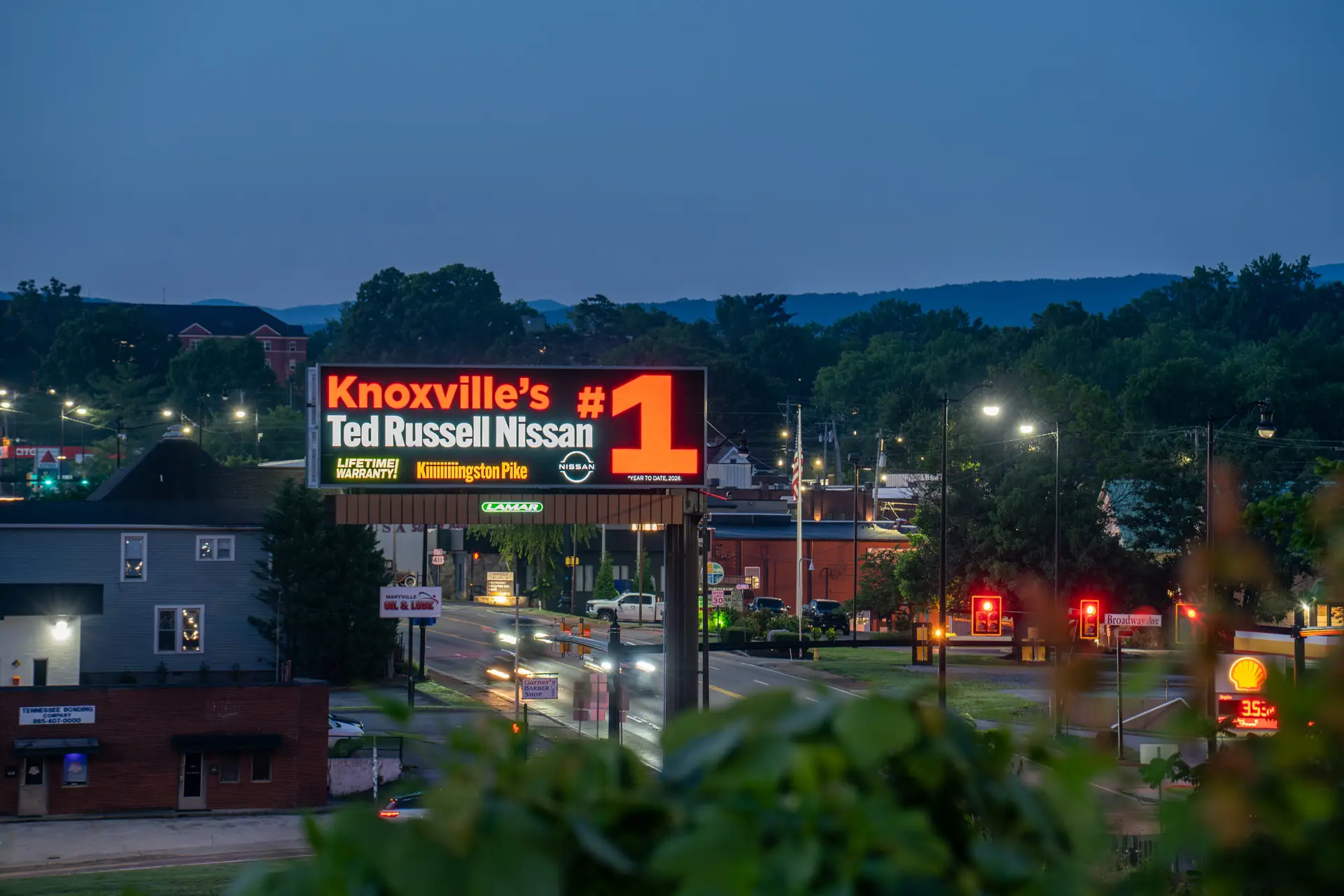
Changes to Alcoa’s sign ordinances approved in May will mean an easier process that what has been in place for developers to find pertinent information — and potentially fewer billboards in town. The new ordinances will allow advertising companies to swap static billboards for their digital cousins as long as they meet a 16-point list of requirements.
The process will follow a parcel-by-parcel analysis. If advertisers have a double-stacked billboard on a plot of land, they’ll be required to take it down to a single billboard if they want to convert it to digital. The display size will be capped at 300 square feet. If the structure is taller than 35 feet, it’ll have to come down to the new limit, and existing billboards already below 35 feet cannot be raised.
If an advertiser has two billboards on separate parcels, they can opt to eliminate one to gain a 500-square-foot digital billboard on one site.
Digital billboards must replace existing billboards and cannot be relocated to parcels that do not already contain billboards. They must remain static for at least 60 seconds and avoid animation, video or scrolling effects.
Across the city, the new ordinances will also eliminate redundant language from zones with matching signage requirements.
Jeremy Pearson, city planner for Alcoa, said the city has considered consolidating its sign ordinances in the past, hoping to provide a more streamlined resource. The project fell by the wayside but resurfaced when Lamar Advertising approached the city asking for changes to the sign ordinance.
City staff felt any changes should be part of a bigger discussion about the sign ordinances.
“We didn’t want to just piecemeal something together,” Pearson said.
Lamar Advertising boasts a portfolio of more than 360,000 outdoor displays, including nine digital advertising faces in Blount County. According to the company’s 2025 SEC filings, about 33% of its total billboard advertising revenue came from its 5,500 digital billboards.
Pearson described the new billboard rules as an incentive to reduce locations. The city will essentially trade a few new digital billboards for fewer billboards overall.
“It’s an opportunity to start to consolidate nonconforming billboards and clean up the number of billboards that are located in the city,” he said.