At the South Blount Utility District Water Treatment Facility, a team of 12 employees monitors pumps and filters, responds to alerts and conducts tests every few hours. For most of them, their work takes place in a control room above the plant, where they keep an eye on the system and fill out paperwork.
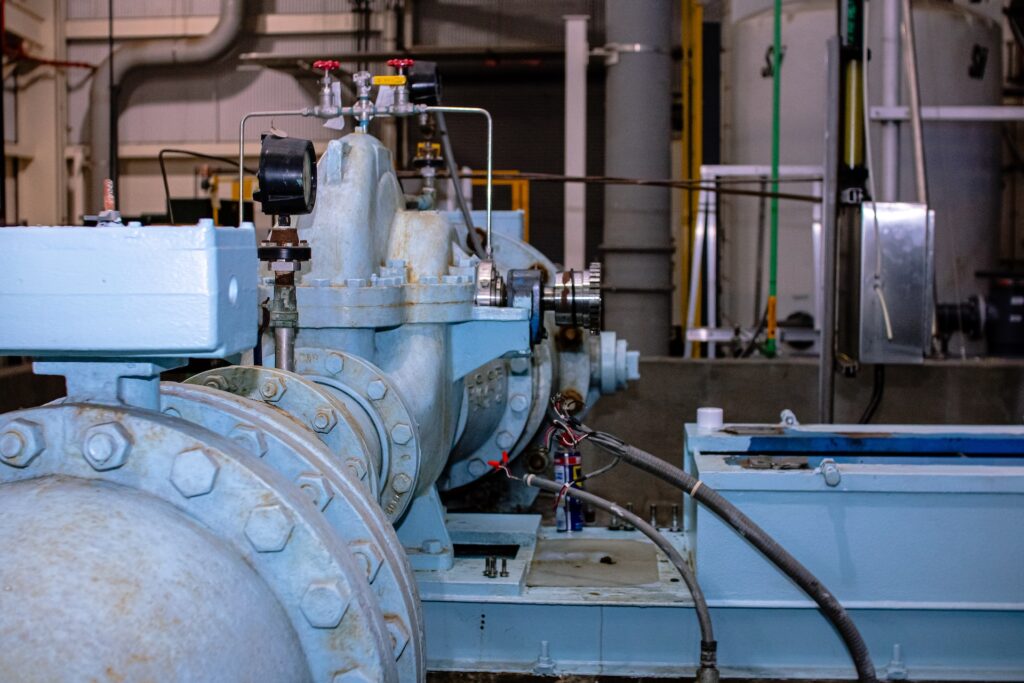
The plant is mostly automated, so there are very few cases where they have to handle the equipment.
“Everything runs pretty well,” said Shannon Boring, chief operator for the plant. “The thing is that when something goes wrong, it’s usually wrong, wrong.”
He’s worked at the South Blount Utility District for 20 years — which means he’s seen the population grow. In 2015, for example, the Blount County population was 127,047, according to the East Tennessee Economic Development Agency (ETEDA).
In 2025, it was 144,178.
With an additional 11% growth expected, development, infrastructure needs and additional demands on the water and sewer systems will also grow.
But even with all the growth the county has already experienced, the South Blount Utility District’s water plant — built in 2004 — is nowhere near its permitted capacity. South Blount is permitted to pull 10.3 million gallons of water per day from the regional watershed.
The plant is averaging 3.7 million gallons per day.
The nearby Alcoa and Maryville water plants tell similar stories. Alcoa, for example, is permitted for 16 MGD and pulls about 7 MGD. Maryville, permitted for 6 MGD, is the closest to its capacity at an average of 4 to 4.5 MGD in demand.
Alcoa has enough extra water that it can sell it wholesale to neighboring utilities like the Tuckaleechee Utility District, turning that extra capacity into revenue.
In the city’s fiscal year 2026 budget, city staff expect to sell about $1.495 million in water to the neighboring district, which doesn’t produce its own water.
According to its 2025 audit, the South Blount Utility District sold water to Friendsville Water Works and Tellico Area Services at a rate of $3.52 per 1,000 gallons.
But having enough water is only part of the equation.
Development pays for more development
Quentin Caldwell — the assistant district manager for South Blount Utility District — describes the work of a water utility as a never-ending process.
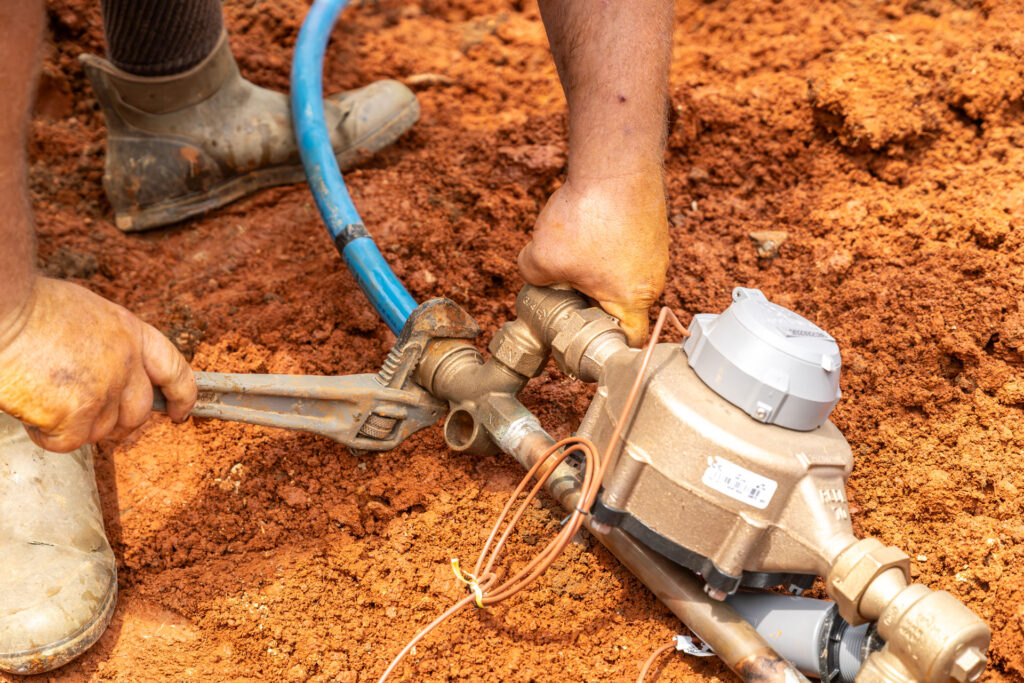
South Blount serves around 18,000 customers, but it adds about 400 customers per year. (That’s water hookups, not individuals.) Outside Maryville and Alcoa, most customers in the county receive their water from South Blount.
As the county grows, Caldwell said the utility district’s job is to anticipate that growth and work with developers to ensure there’s always enough capacity to meet regional needs.
“As news travels that hey, this large tract of land recently sold, and if we think that there’s something going in there, that it’s going to be a large water user, we start looking and asking: Are we ready in that area?” Caldwell said.
For that reason, South Blount is often one of the first groups to hear about potential development. Businesses, builders and contractors will reach out to ensure there’s enough supply to meet their needs.
Economic development depends on infrastructure being in place before growth arrives.
“Failure for us is telling a Smith & Wesson or an Amazon, ‘sorry, we can’t support your demands,'” Caldwell said.
South Blount does supply water to Smith & Wesson. The firearms manufacturer is one of the utility’s biggest customers, and staff upgraded pipes to ensure enough flow to meet the company’s demands.
In 2035, ETEDA predicts the Blount County population will number 160,065 — an 11% increase. While population growth brings new faces, it also brings new businesses, some of which demand huge amounts of water to operate when compared to the average single-family home.

Most of the local utilities follow a “development pays for development” model designed to protect customers from cost increases. If a developer puts in a subdivision in Maryville, for example, they’ll first have to install the necessary water infrastructure to supply the houses. Then, when construction concludes, they donate the pipes to Maryville and the city assumes operation of the system.
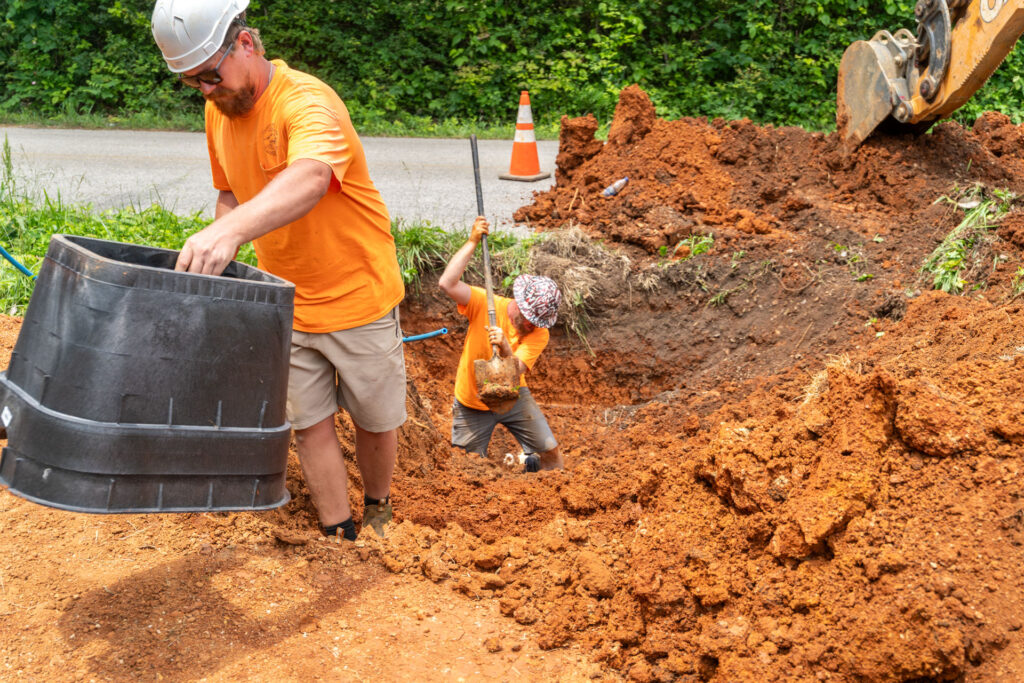
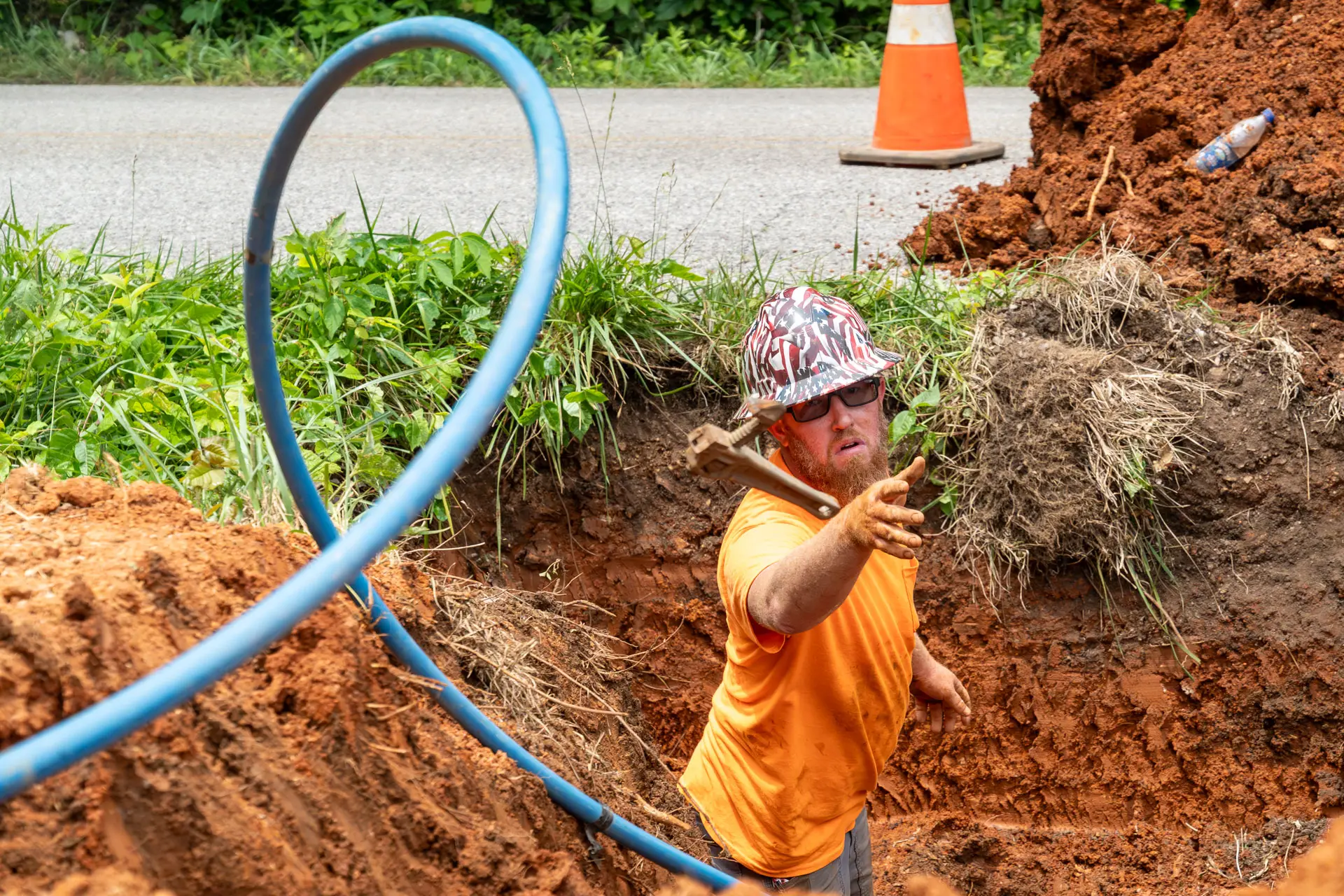
But development can’t pay for every expense. Local utilities must still maintain their own systems — and sometimes upgrade them to handle growth. Caldwell said South Blount, for example, needs to replace its current main line into Louisville with a larger pipe, and that’s a project the utility will have to pay for itself.
Bottlenecks
Blount County’s water processing plants draw about 15 MGD, but together they have more than 17 MGD in additional unused capacity. That means the real regional bottleneck is not supply, but the utilities’ ability to distribute that supply.
Take the Maryville system, for example.
Jessica Cooper, public utility director for Maryville, said the system is functioning perfectly fine — but the city is starting to run into edge areas where it can’t provide the same level of service as staff would like.
The main constraint, she said, is water pressure. Maryville’s water regulations establish minimum pressure requirements at the meter and minimum flow requirements at fire hydrants, something groups like Tuckaleechee Utility District don’t offer their more rural customers.
Be it through distance, elevation or other factors, Cooper said sometimes Maryville couldn’t meet those self-imposed limits on a potential service area.
“We do have a few areas where right now those hydrants and those areas as they exist would meet those numbers, but if you add an extension to build a new subdivision, it may not have enough pressure at the end of that line,” Cooper said.
That’s a headache — albeit a limited one — that Alcoa Director of Public Works Shane Snoderly echoed. For the most part, he said, Alcoa has inherited robust water infrastructure left over from investments made by the Aluminum Company of America, but in one or two spots the city has to keep fire flow limits in mind.
As the region grows, cities will need additional pipes, pumps and other materials to maintain pressure across the spreading system — projects not directly linked to a specific development that might pay for the infrastructure. Alcoa, for example, is working to boost supply to the Wildwood area. The replacement of a local tank and work on the local pump station will increase regional service and support residential growth, according to Public Information Officer Emily Crateau.
The tank is estimated to cost $1.1 million, she said, and work on the pump station in fiscal year 2026 has cost around $300,000.
And South Blount Utility District, Caldwell said, spends about $5 million annually on capital improvements like technology, pipe upgrades and plant work. That work is funded by ratepayers, and Caldwell expects the cost will rise to as much as $7 million in the coming years.
In Townsend, Tuckaleechee Utility District is installing a duplicate line to supply the city and its 5,000 customers, protecting them from the vulnerability of a single water source. The $10 million project is funded through a federal grant and a bond, which Board Chair Lamar Dunn said didn’t create a need to adjust rates.
But the economic pressures affecting other industries also touch the water supply.
“Any expense obviously affects rates,” Dunn said. “The dilemma that everyone has these days is that expenses for everything are going up. We have to pump our water, and power costs are going up. The price of wholesale water is going up, labor costs are going up and all of that affects our rates.”
Last year, Tuckaleechee implemented a 5% rate adjustment to cover expenses.
The big challenge: wastewater
Another major infrastructure cost is looming.
In Maryville and Alcoa, the question is not how to get the water to the customer, but what to do with it once they’ve used it.
While South Blount operates some decentralized wastewater solutions, Maryville operates the only centralized wastewater treatment plant in Blount County. The city has an operating agreement with Alcoa to handle the neighbor’s wastewater, and also takes some flow from Knox- Chapman Utility District in south Knox County.
The plant is permitted for 14 MGD in the summer and 17 MGD in the winter. It’s within its operating limits for wastewater flow, but Cooper said the city is concerned about the actual waste load. The total suspended solids, organic matter and overall wastewater strength are stretching the plant’s limits.
In other words, the plant may still be able to accept more gallons, but it’s being stressed by what’s in those gallons.
The need isn’t urgent yet, but Cooper said it’s best not to play catch-up with a utility that is essential.
“I would rather do it now than go, we really don’t need to do that for another 7-10 years, then get up on it and be like, oh, we should have started this 5 years ago,” she said.
Maryville is planning a multi-stage process to upgrade the plant’s capacity, but it’s going to take time, effort, and likely a bond issue. The first stage, based on 30% design completion, is expected to cost $100 million on its own.
Cooper said she has no estimate for the project’s ultimate cost, noting that later phases have not yet been designed.
One thing is for certain, though: Cooper said the work will demand rate increases for customers.
Maryville’s 2026 sewer rates are already a few percent higher than its 2025 rates, and Alcoa bumped its sewer rates last year as well, explicitly tying those changes to upcoming work on the wastewater treatment plant.
“Making these investments now helps keep the system reliable for today’s residents and protects it for future generations,” city staff wrote in a December release sent alongside the rate adjustments.
Those rate adjustments can have far-reaching repercussions. Higher utility bills increase the cost of living for residents and the cost of doing business for employers, making infrastructure investments an economic issue as much as an engineering one.
But work on the wastewater plant isn’t optional, which means the money has to come from somewhere. Maryville, Cooper said, is working with a rate consultant to minimize the project’s impact on customers.
And once the work is done, the door will be opened to a new wave of growth.
Drought
Maryville and Alcoa pull their water from the Little River. The South Blount Utility District draws from the Tellico Reservoir — an artificial lake created by the Tennessee Valley Authority in the 1979. According to data measured by the United States Geological Survey, flow in the rivers feeding both sources has trended ever so slightly upward since the year 2000.
But a drought period in the 2000s is still fresh in local memory as far as utility operators are concerned.
Drought conditions place additional pressure on water plants as water supply becomes more constraining than the system’s capacity.
Alcoa, Maryville and South Blount all have plans to handle future droughts, and part of that plan includes sharing water between each other. Tuckaleechee Utility District, too, is hooking its system into South Blount’s.
The Townsend-centered utility has purchased water from Alcoa since the 1960s, Dunn said. But if drought conditions limit Alcoa’s withdrawals from the Little River, Dunn said the utility wants the security of an additional source. South Blount’s water supply maintains naturally higher levels thanks to the Tellico Dam, which better positions the group to weather droughts.
Although TVA representative Scott Brooks pointed out that Tellico water levels vary about four feet from winter to summer making it more resistant to flooding and drought than other local reservoirs.
They already have an agreement to provide water to Maryville if need be. And Caldwell said they’re in the process of creating a metered connection with Alcoa to do the same.
Interconnection creates resiliency. And for utilities, failing to provide water to customers isn’t an option.
Cooper said the county’s water utilities communicate continuously with each other to avoid impacting customers during periods of low rainfall.
“We want to make sure we’re not creating a bottleneck for ourselves or for other utilities,” she said. “If their infrastructure is small, maybe because it’s at the edge of their system where it meets ours, they may not be able to provide enough water, so over time we talk, we meet regularly and talk about other places we could interconnect that would help us out.”
A map for the future
The county’s major water providers have enough treatment capacity to meet growing demand. But whether a subdivision gets built, whether a manufacturer can expand or whether a commercial project moves forward may depend less on the availability of water than on the existence of the pipes, pumps, storage tanks and wastewater infrastructure needed to move it.
That idea is reflected in the county government’s new comprehensive plan, released in 2026, which calls for infrastructure investments that help direct growth rather than simply respond to it.
In practice, that means utility systems must act less as a supply and more as a map for the county’s future.
Most residents will never see the transmission mains beneath Louisville, the wastewater equipment planned for Maryville or the pump stations serving Alcoa’s growing edges. But those projects may ultimately have as much influence over the shape of Blount County as any zoning decision.
The future of growth, it turns out, may be decided underground.